 U nas zapłacisz kartą

Właściwa pielęgnacja skóry za pomocą kremu do twarzy z noni
May relieve pain in people with arthritis
For over 2,000 years, noni fruit has been used in traditional folk medicine for its pain-relieving effects. Some research now supports this benefit.
For instance, in a 1-month study, people with degenerative arthritis of the spine took 0.5 ounces (15 ml) of noni juice twice daily. The noni juice group reported a significantly lower pain score — with complete relief of neck pain in 60% of participants (28).
In a similar study, people with osteoarthritis took 3 ounces (89 ml) of noni juice daily. After 90 days, they experienced a significant decrease in the frequency and severity of arthritis pain, as well as an improved quality of life (29).
Arthritis pain is often associated with increased inflammation and oxidative stress. Therefore, noni juice may provide natural pain relief by reducing inflammation and combatting free radicals ( 30 , 31 ).
Side Effects of Noni Juice
Research evaluating the safety and efficacy of noni juice has provided positive results regarding its consumption on a dose-dependent basis. However, special cases and individual concerns require caution to be exercised. A few of the concerns have been mentioned as under: [25]
- High potassium content: Noni juice contains a good concentration of potassium which may interfere with various drugs used for curing high blood pressure such as potassium-sparing diuretics and angiotensin receptor blockers. These two can collectively result in very high levels of potassium in the body giving rise to symptoms like nausea and cardiac arrhythmia. [26]
- Kidney problems: Basis the above-mentioned reason, noni juice should not be taken by the individuals already combating kidney problems as it may tend to aggravate the existing condition.
Although several studies have advocated regarding the safety of noni juice, it is strongly recommended to consult a medical professional before considering it for remedial measures especially during special conditions like pregnancy and lactation. [27] [28]
What Is Noni Juice? Everything You Need to Know
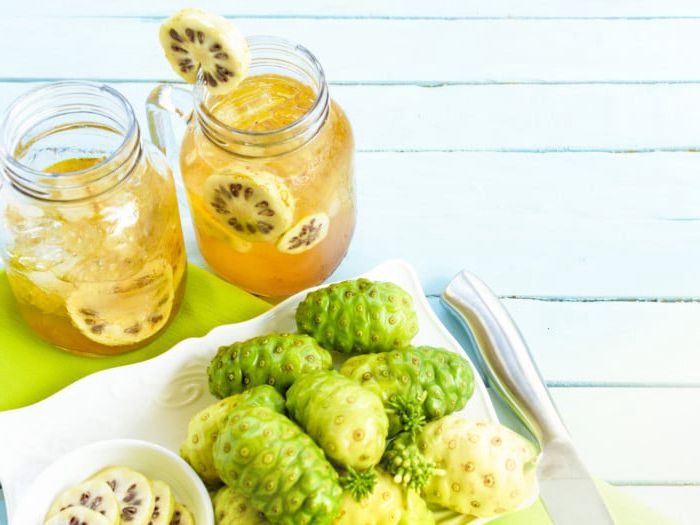
Noni juice is a tropical drink derived from the fruit of the Morinda citrifolia tree.
This tree and its fruit grow among lava flows in Southeast Asia, especially in Polynesia.
Noni (pronounced NO-nee) is a lumpy, mango-sized fruit that is yellow in color. It’s very bitter and has a distinct odor that is sometimes compared to stinky cheese.
Polynesian peoples have used noni in traditional folk medicine for over 2,000 years. It’s commonly used to treat health issues like constipation, infections, pain, and arthritis ( 1 ).
Today, noni is mostly consumed as a juice blend. The juice is packed with potent antioxidants and may provide several health benefits.
This article provides everything you need to know about noni juice, including its nutrients, potential health benefits, and safety.
The nutritional content of noni juice varies widely.
One study analyzed 177 different brands of noni juice and found significant nutritional variability among them ( 2 ).
This is because noni juice is often mixed with other fruit juices or added sweeteners to mask its bitter taste and foul odor.
The nutrients in 3.5 ounces (100 ml) of Tahitian Noni Juice are (3):
- Calories: 47 calories
- Carbs: 11 grams
- Protein: less than 1 gram
- Fat: less than 1 gram
- Sugar: 8 grams
- Vitamin C: 33% of the Reference Daily Intake (RDI)
- Biotin: 17% of the RDI
- Folate: 6% of the RDI
- Magnesium: 4% of the RDI
- Potassium: 3% of the RDI
- Calcium: 3% of the RDI
- Vitamin E: 3% of the RDI
Noni Juice Summary
Noni juice has been prized for its medicinal nature for more than 2000 years in Polynesia, China, and India and is a major part of emerging healthcare trends. Numerous people across the globe including the health experts have testified the astounding and life-changing health-related benefits of it. While the fruit and its juice are quite popular for their therapeutic qualities, other parts of the noni plant such as bark, leaves, and roots too have a spanning history of traditional usage in Polynesia. The bark and roots of the noni plant have been traditionally used for dyeing purposes attributing to the presence of yellow chemicals known as anthraquinones. [29] [30] [31]
Apart from the above-listed advantages, proxeronine present in noni juice is an effective anti-inflammatory enzyme which also provides relief in symptoms of menstrual pain and endometriosis in women. Noni juice helps elevate the mood by stimulating the production of serotonin and prevents the condition of anxiety. It works as an amplifier for the entire endocrine system which is positive for the functioning of the thymus gland, pineal gland, adrenal glands, and sex organs for both males and females.