 U nas zapłacisz kartą

Rozwiązanie problemu "Hebe niszcz pryszcz"
Eveline Volumix Fiberlast Ultra False Lash Effect
Maskara dająca efekt sztucznych rzęs. Szczoteczka ma fajny kształt, jej wygięcie jest dopasowane do kształtu oka. Całkiem dobrze rozczesuje rzęsy, ł adnie i delikatnie je podkręca oraz unosi. Da się nią wyciągnąć rzęsy w zewnętrznym kąciku oka. Nadaje się również do tuszowania dolnych rzęs. N iestety w moim przypadku ta szczoteczka zawsze brudzi mi powiekę, chociaż nie wiem jak bardzo bym się starła. Myślę, że m oże się też nie sprawdzić u kogoś z małymi oczami. Ten tusz u mnie ląduje na trzecim miejscu.
How to grow hebe plants
Most hebes thrive in moist but free-draining soil, in full sun to partial shade, ideally in a sheltered spot protected from winds. They don't need rich soils and will tolerate drought.
Deadhead spent blooms to improve the look of your hebe and keep it flowering for longer. Prune back in late summer to encourage strong new growth and a good overall shape.
More like this
More on growing hebes:
Find out more about growing and caring for hebes below.
Where to grow hebes
Hebes are native to scrubland and, as such, are tough plants, however, they do need protection from cold winter winds. Some hebes are hardier than others – as a general rule, large-leaved varieties are more tender than small-leaved ones. They're tolerant of salt and can therefore be grown in coastal situations.
Choose a sheltered spot for your hebe, such as in front of a south- or west-facing wall. Hebes are tolerant of poor soils so will grow virtually anywhere. Larger cultivars can be grown at the back of a border while smaller varieties can be grown towards the front or in pots.
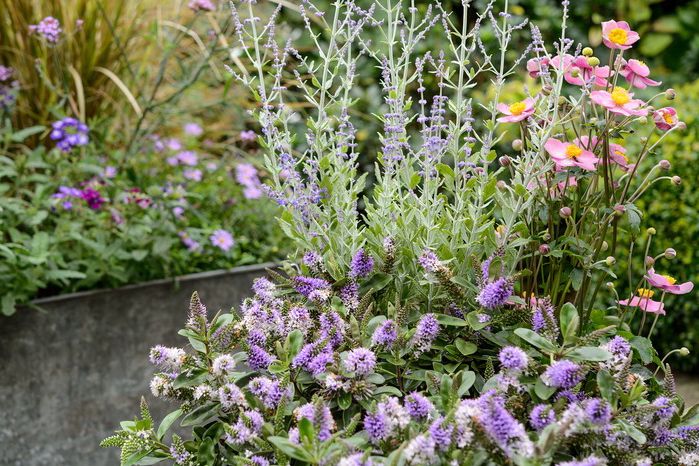
Hebes work well with a range of other plants, including catmint and Japanese anemones (pictured, above), along with cranesbill geraniums, penstemons and other herbaceous perennials.
How to plant hebes
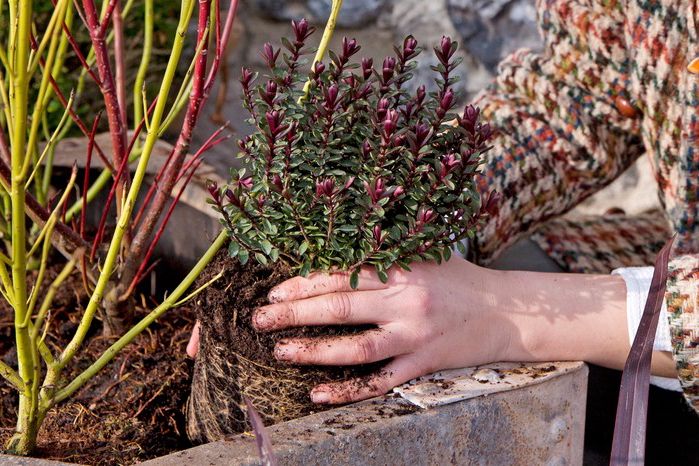
Plant your hebe in late spring so it can establish during the summer months. Dig a planting hole slightly wider than the pot it's growing in. As hebes do best in poor soil, there's no need to add organic matter, so simply place the rootball in the hole, ensuring it's at the same depth it was growing in the pot.
Hebes: Australian Growing Guide
Any plant inspired by a Greek goddess is sure to get one’s attention. Hebes are genus of plants native to New Zealand (where it is the largest plant genus), French Polynesia, the Falkland Islands, and South America. It includes about 90 species.
In our guide, we’ve covered everything from growing and caring for a hebe shrub, how to propagate one, and even how to take the perfect cutting.
Genus:
Family:
Common Name:
Hebe shrub, shrubby Veronica
Plant type:
Lifespan:
Size:
Sun requirements:
Soil Type:
Acidic, neutral, alkaline, well-draining
Flower Colour:
Maintenance level:
Poisonous for pets:
How to grow hebes
All you need to know about growing bee-friendly hebes, in our detailed Grow Guide.
Hebes are popular evergreen shrubs, mostly native to New Zealand although some are indigenous to Australia and South America. They come in a variety of shapes and sizes, and are suitable for growing in a wide range of sites and planting schemes. Hebes are excellent in shrub borders, used as ground cover or low-growing hedging, and are relatively low-maintenance.
Hebes flower over a long period – all year round in mild regions – with flower colours including pink, blue and white. They can be an important late-year source of nectar and pollen for bumblebees. Leaf colour varies too, from dark green to pink and variegated. Less-hardy hebes can be grown in cool glasshouses or alpine houses.
Hebe niszcz pryszcz
Products Ingredients Decode INCI Login Register
Login Register
Follow us on our new Insta page »
A delicate, well-absorbed cream is recommended for the daily care of oily, combination and acne-prone skin.