 U nas zapłacisz kartą
Mikrodermabrazja - Jak Skutecznie Chronić Skórę Przed Słońcem
What Is Microdermabrasion?
Melissa Fiorenza is a writer with over 15 years of experience covering topics in health and fitness, parenting, beauty, and women's issues. Her work appears in publications including Health, Prevention, Cosmopolitan, Time Out New York, and The TODAY Show. Melissa is also authored the book Twentysomething Girl.
William Truswell, MD, FACS, operates his own cosmetic and reconstructive facial surgery practice. Dr. Truswell was the first in his area in Western Massachusetts to have an accredited private office surgical suite.
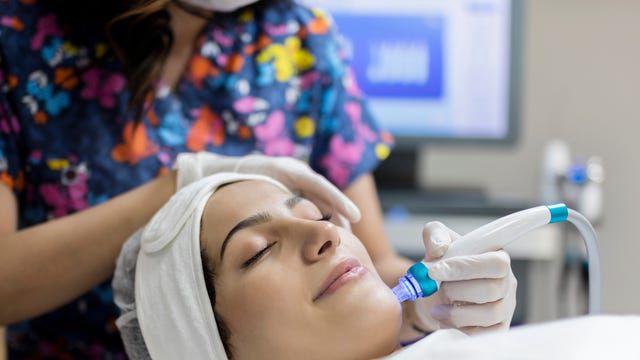
While at-home microdermabrasion kits are available for purchase, a dermatologist or facial plastic surgeon may be able to do a more thorough job. Aestheticians, medical assistants, and nurses can also perform microdermabrasion. No anesthesia is needed, and there are minimal side effects.
Purpose of Microdermabrasion
Microdermabrasion is essentially a sophisticated exfoliation process. Over time, the new skin that forms will be more healthful than the outer layer of skin that was removed with the wand device.
This is partly due to the increase in collagen, a protein that helps keep skin firm but is produced less as you age. With increased collagen from microdermabrasion, you can have younger-looking and more absorbent skin.
Who Is It For?
Microdermabrasion may be an effective option if you want to remove or reduce certain skin issues or generally desire a younger, more rejuvenated look. Those who have had the procedure describe their skin as having an improved glow, softness, and texture.
Microdermabrasion can be performed on any skin area, including the face, neck, thighs, and abdomen. The procedure is often used to treat:
- Acne and blackheads
- Acne scars
- Age spots
- Darkened skin patches and melasma (a skin condition that causes patches and spots, usually on the face)
- Enlarged pores
- Fine lines and wrinkles
- Stretch marks
- Sun damage
- Uneven skin tones or texture
Microdermabrasion might also be beneficial if you take medication, such as insulin, through the skin. Research has shown that receiving microdermabrasion in the area where the medication will be applied can improve medication delivery. However, more research is needed to know for sure.
Microdermabrasion vs. Chemical Peels
Microdermabrasion and chemical peels are both exfoliating treatments with similar goals: to remove dead skin cells and reveal a more glowing complexion. While microdermabrasion uses microcrystals, chemical peels use chemicals like alpha hydroxy acids or salicylic acid.
Microdermabrasion might be the option for you if you prefer a more gentle procedure with no downtime. It was introduced in 1985 as a less aggressive alternative to chemical peels.

Daftar manfaat mikrodermabrasi
Mikrodermabrasi dilakukan dengan menghilangkan lapisan kulit paling atas. Menurut American Academy of Dermatology Association, beberapa manfaat mikrodermabrasi adalah sebagai berikut.
- Memperbaiki tekstur kulit . Prosedur ini dapat menghaluskan tekstur kulit, mengurangi keriput halus, garis-garis halus, dan noda kulit.
- Pengelupasan sel kulit mati . Fungsi mikrodermabrasi lainnya adalah menghilangkan sel-sel kulit mati dari permukaan kulit, sehingga kulit terlihat lebih segar dan bersinar.
- Mengecilkan pori-pori. Gilasan kristal pada kulit dapat mengecilkan pori-pori kulit.
- Mencerahkan kulit kusam . Mikrodermabrasi bisa membantu meningkatkan warna kulit yang mengalami hiperpigmentasi.
- Mengatasi jerawat. Prosedur ini dapat mengurangi jerawat , komedo, dan bekas jerawat.
- Merangsang produksi kolagen. Mikrodermabrasi dapat merangsang produksi kolagen , yang dapat mengencangkan kulit dan mengatasi gejala penuaan.
- Menyerap produk skincare dengan baik . Prosedur ini meningkatkan kemampuan kulit menyerap zat aktif dari produk skincare karena menghilangkan sel kulit mati yang menghambat penyerapan zat aktif.
A Quick Review
Talk to a healthcare professional about microdermabrasion if there's something about your complexion you want to minimize or erase. The minimally invasive, widely available procedure is gentle on skin, low in risk, and effective in improving a variety of skin features.
Microdermabrasion can help with skin conditions like stretch marks, enlarged pores, age spots, fine lines, and acne scars. It can even be done at home, but for the safest and most effective treatment, look for an expert who can do it in their office or medical spa.
Health.com uses only high-quality sources, including peer-reviewed studies, to support the facts within our articles. Read our editorial process to learn more about how we fact-check and keep our content accurate, reliable, and trustworthy.
- Shah M, Crane JS. Microdermabrasion. In: StatPearls. StatPearls Publishing, 2022.
- American Academy of Dermatology Association. Microdermabrasion: overview.
- Lokhande AJ, Mysore V. Striae distensae treatment review and update. Indian Dermatol Online J. 2019,10(4):380-395. doi: 10.4103/idoj.IDOJ_336_18
- American Academy of Dermatology Association. Microdermabrasion: FAQs.
- American Society of Plastic Surgeons. What is microdermabrasion?
- Soleymani T, Lanoue J, Rahman Z. A practical approach to chemical peels. J Clin Aesthet Dermatol. 2018,11(8):21-28.
- American Academy of Dermatology Association. Chemical peels: FAQs.
- American Society of Plastic Surgeons. What are the steps of a microdermabrasion procedure?
- American Academy of Dermatology Association. Microdermabrasion: preparation.
- American Society of Plastic Surgeons. What should I expect during my microdermabrasion recovery?
- American Society of Plastic Surgeons. What are the risks of microdermabrasion?
- American Society of Plastic Surgeons. How much does microdermabrasion cost?